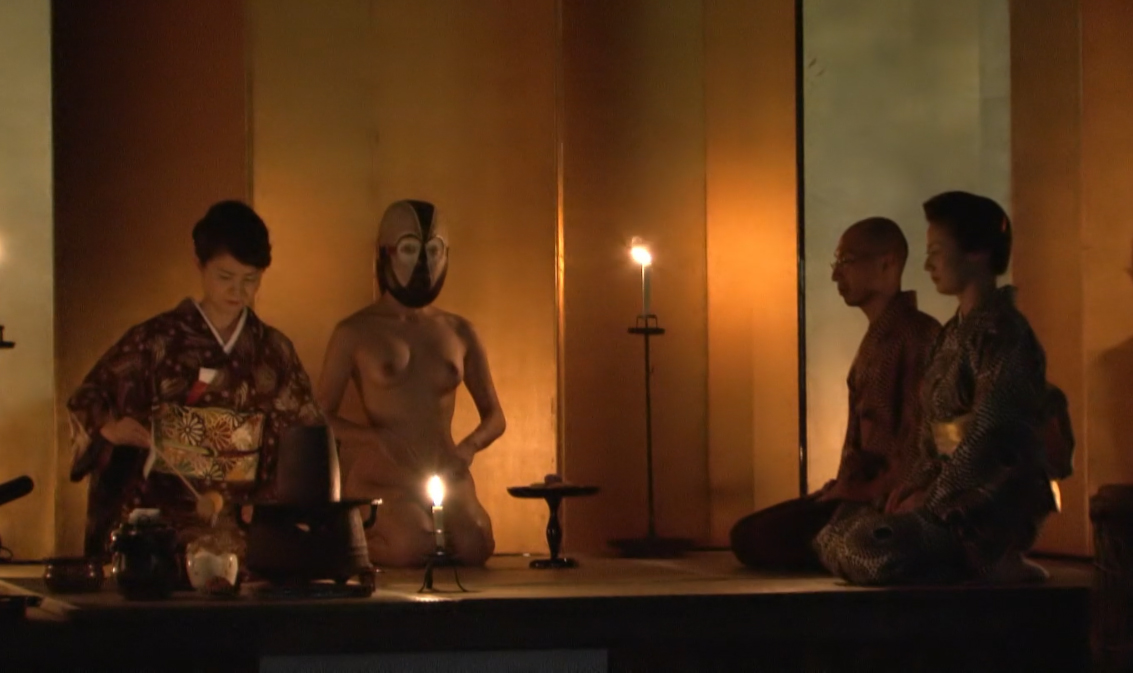
WAFRICA TEA CEREMONY
Ceremony and ritual are as old, as universal and as diverse as humankind itself. Ceremonial aesthetics have always fascinated me as I grew up moving from culture to culture, trying to find my way amidst the rhythms of each society.
Chanoyu the Japanese tea ceremony that dates from the 16th century emphasizes ichigo ichie, the ephemeral beauty that comes together in one fleeting moment. A single bowl of tea shared between host and guests who may never meet again in this same space, at this same time. Highly codified in gesture and nuance, tea gatherings nonetheless represent a return to an ideal of subdued simplicity accented with seasonal color.
In October 2009 at the Tokyo Institut Franco-Japonais, I tried something a little different: I introduced notes of African mythic-eternal to the Japanese seasons. A naked goddess wearing a tribal mask now bore witness to the meeting of hostand guests, iron, charcoal-fire hearth and water. Lilting strains [arpeggios] of kora west African calabash harp mingled with the matsukaze « pine wind » whisper of the boiling kettle. The tea room installation became a primitive thatched hut with no walls, a bare minimum shelter from the savagery of city life.
No longer the preconceived chanoyu most Japanese practitioners know, nor like anything I had ever seen in my native Cameroun, this Wafrica tea ceremony—wa « Japanese grace » plus African spirit—offered a communion of half-remembered experiences and new delights for all to savor.