AKAA: A decade showing art from Africa diaspora
Art & design fair
Paris – 24-26 october 2025
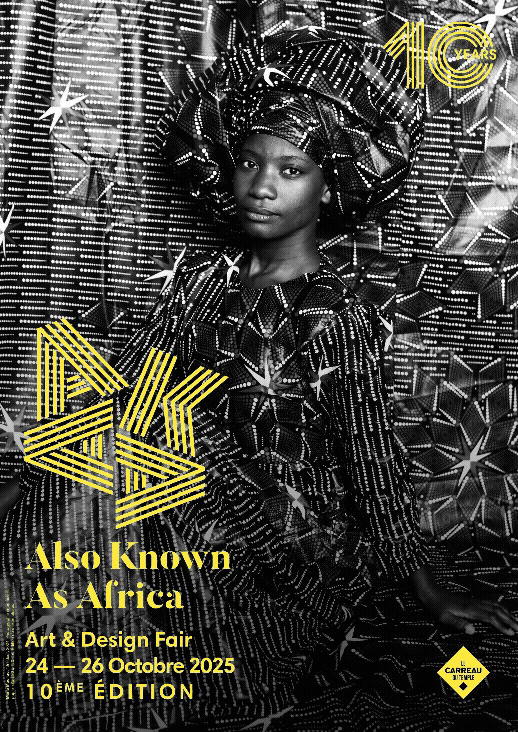
Paris hosts hundreds of art events each year, and it can be tough for participants to stand out on a crowded cultural calendar, or even to survive amid the competition. But one of the most interesting art and design fairs is celebrating its 10th anniversary this autumn, presenting a remarkable range of works by artists from Africa and the African diaspora.
AKAA – Also Known As Africa – brings together some 44 galleries and more than 80 artists, exhibiting Oct. 24-to-26, “under the glass roof” of the Carreau du Temple, a striking 19th-century building that once served as a covered market, in the (now trendy) 3rd arrondissement of the French capital.
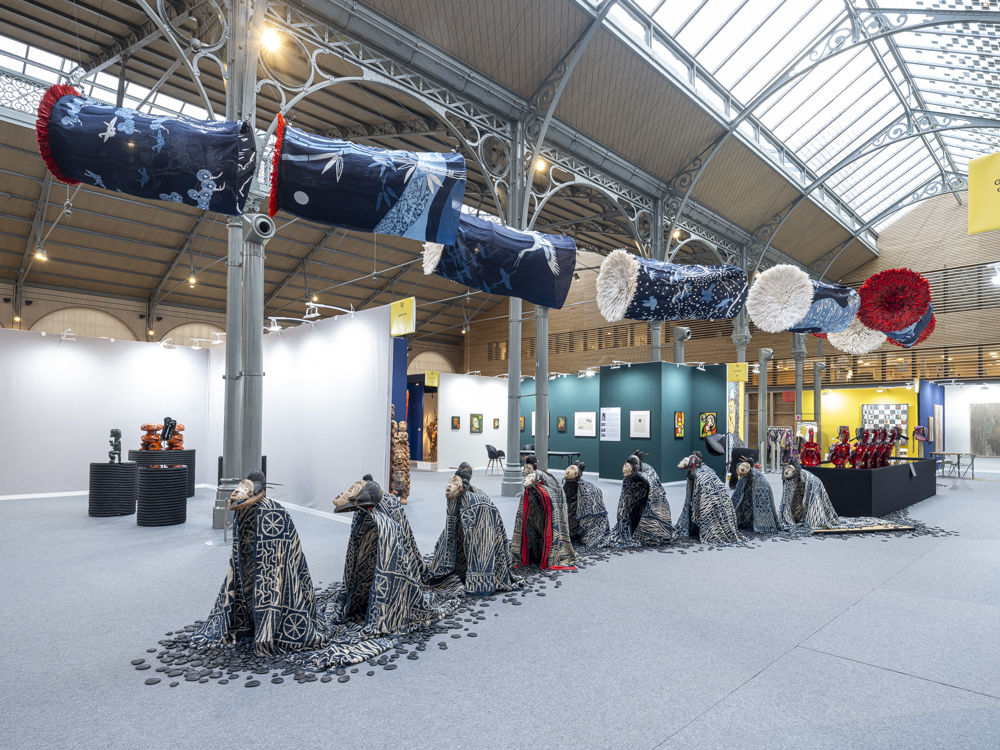
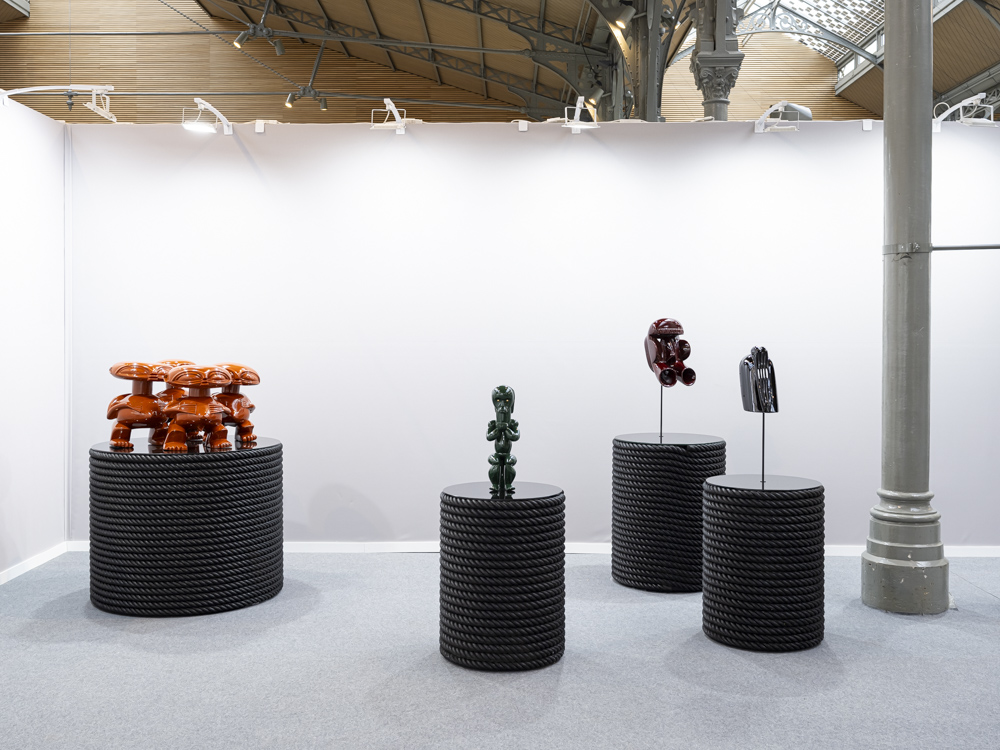
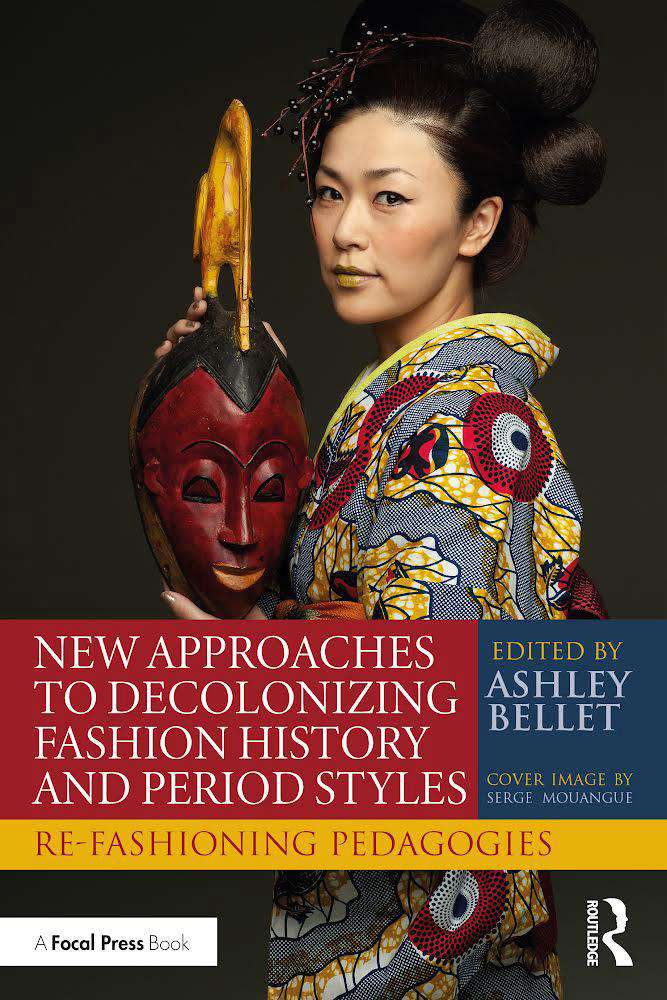
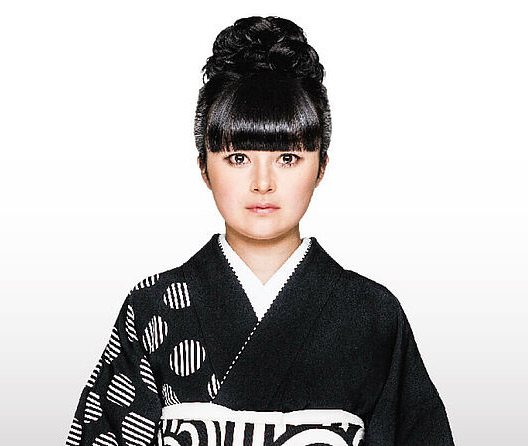
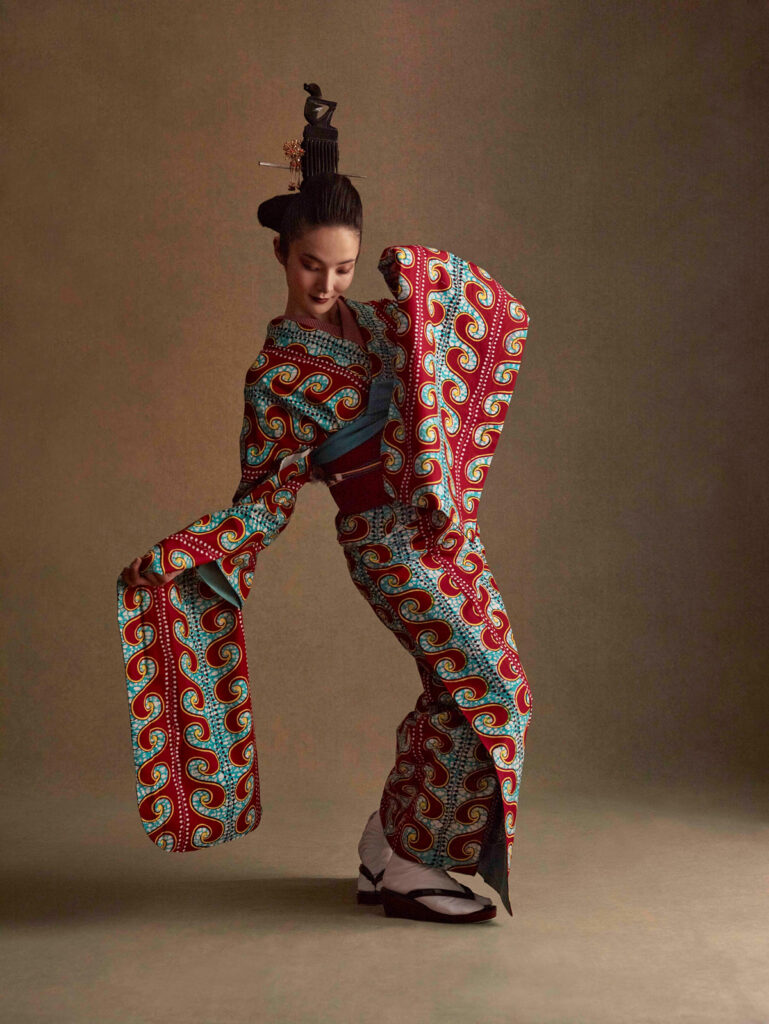
Here, a dramatic series of sculptures by Cameroon-born Serge Mouangue demands an extended pause for observation and awe. At first glance, the work seems to be of Japanese origin because the artist “merges the formal elegance of the Japanese kimono with African textiles and visual rhythms”, as the curators put it.
In the first part of the installation (which overall is titled “The Third Aesthetic”), a meandering row of female figures appears to be heading out on a journey, dressed in
traditional “kimonos”, their hair in buns with kanzashi, or “hair chopsticks”, as decoration. But even as their “faces” appear Japanese, one can see on closer inspection that these are African masks, and the clothing is made from African textiles that recall Japanese indigo dyeing.
“This is called Seven Sisters, and it’s a procession of fourteen women walking towards Mount Fuji,” explained Mouangue, who lived in Japan for five years and maintains close links with the country. He told SWAN during the exhibition preview that he acquired the masks from Gabon, used original kanzashi from Japan, and chose fabric for the intercultural resemblance – deliberately creating a fusion of elements with the structures.
“I want people to question what they’re seeing,” Mouangue said. “I want them to think about cultural reflections and links because living and working in Japan brought me closer to Africa.”
He added that as an artist, he wanted to “delve deeply” into topics such as identity
and spirituality, and for this, he works with craftsmen and women who “embody excellence” and who “respect traditions”.
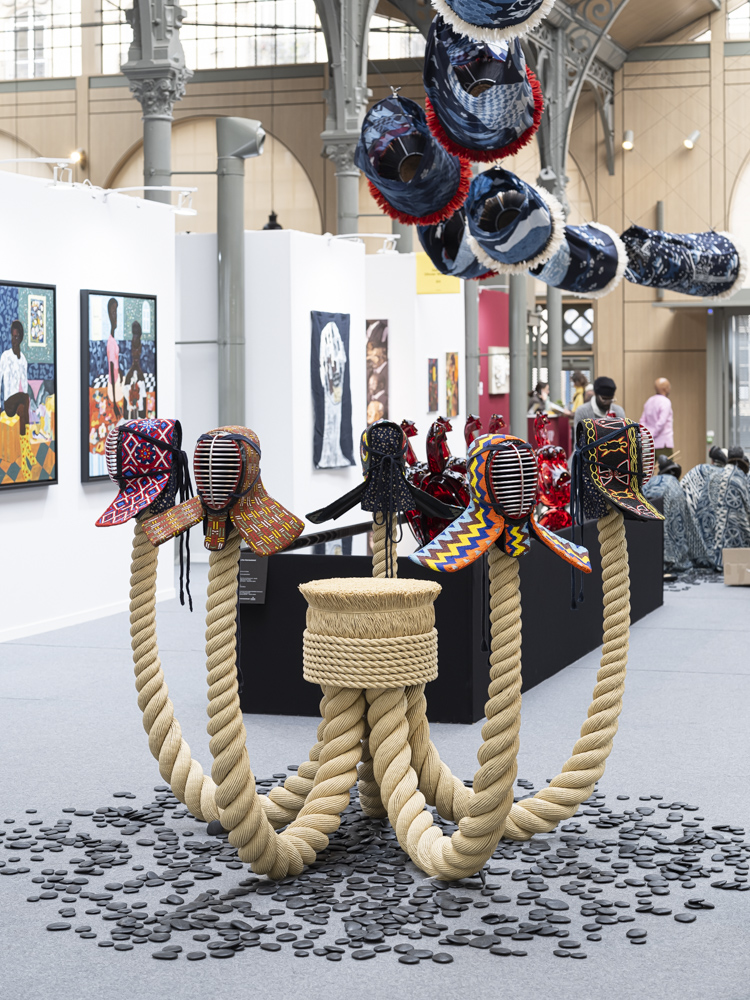
He has collaborated with a group called Nawawaseya, for instance, to provide “sacred rope” (used at shrines) for a second sculpture in the installation. In this, kendo masks are decorated with African beads from the west Cameroon region where Mouangue grew up, again combining African and Asian aesthetics.
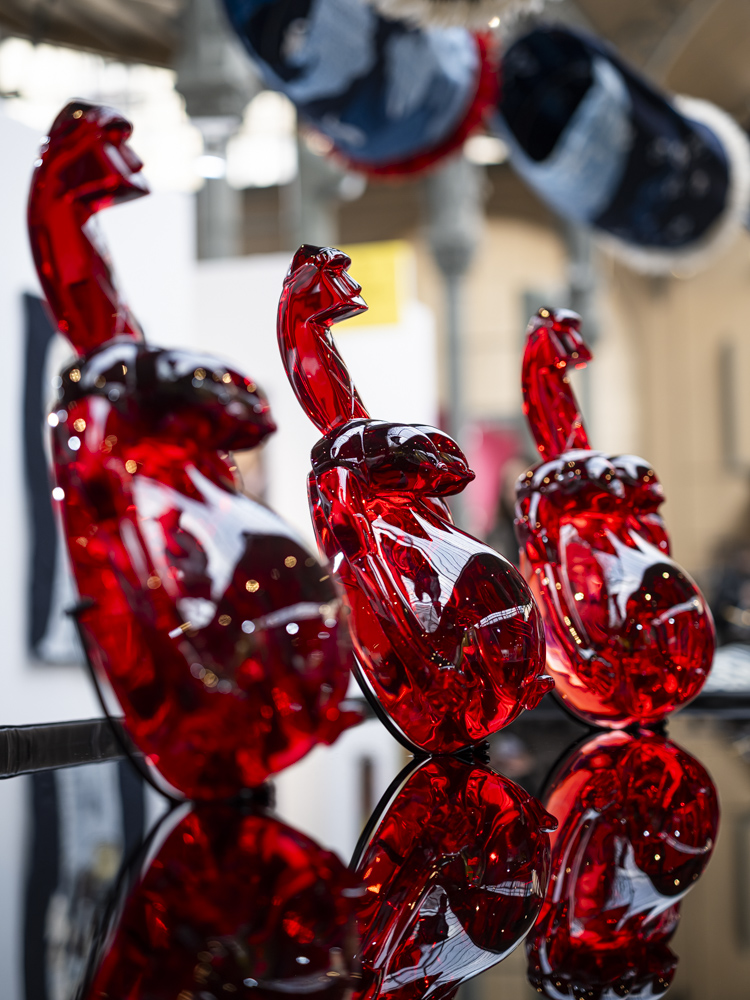
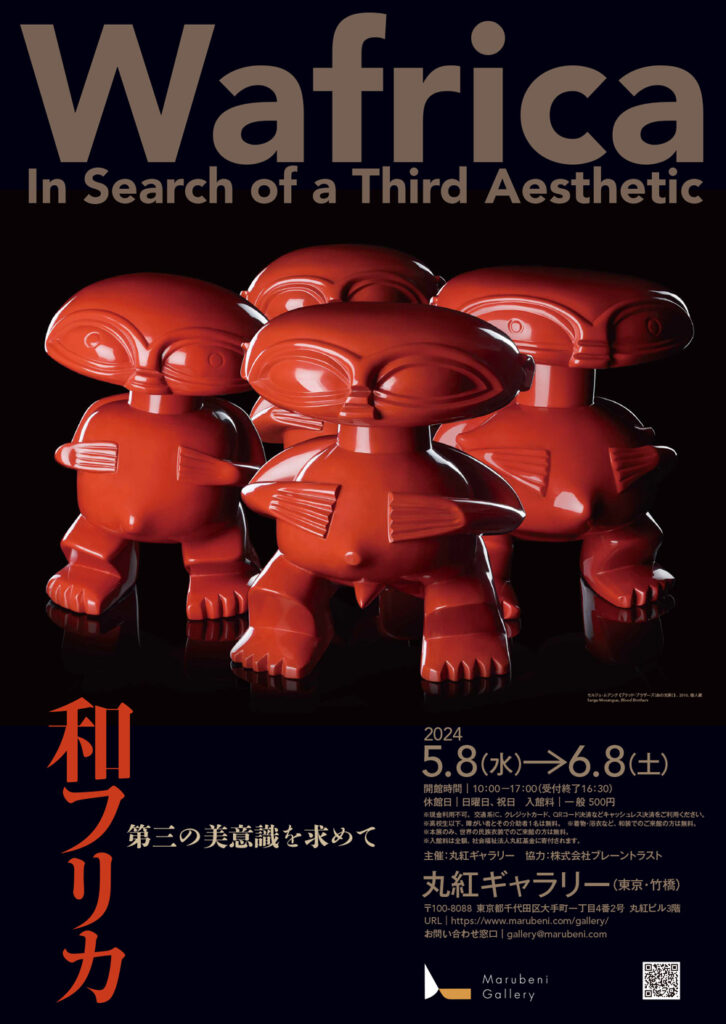
A third section of the installation features fertility figures, constructed from a transparent resin in varying shades of scarlet, with Japanese Noh masks as the foetuses. The statues are mounted on a stand containing water that reflects their colour.
“This is about fertility and giving birth,” Mouangue told SWAN. “It took me seven years all together to make this because there is lots of complexity in the material, which is a specific resin, and in the shaping for the mould.”
In addition to Mouangue’s spectacular sculptures (represented by “space Un” gallery of Tokyo), the fair offers a wide array of memorable works through the participation of European galleries as well as those based across the Atlantic.
Alecia McKenzie